
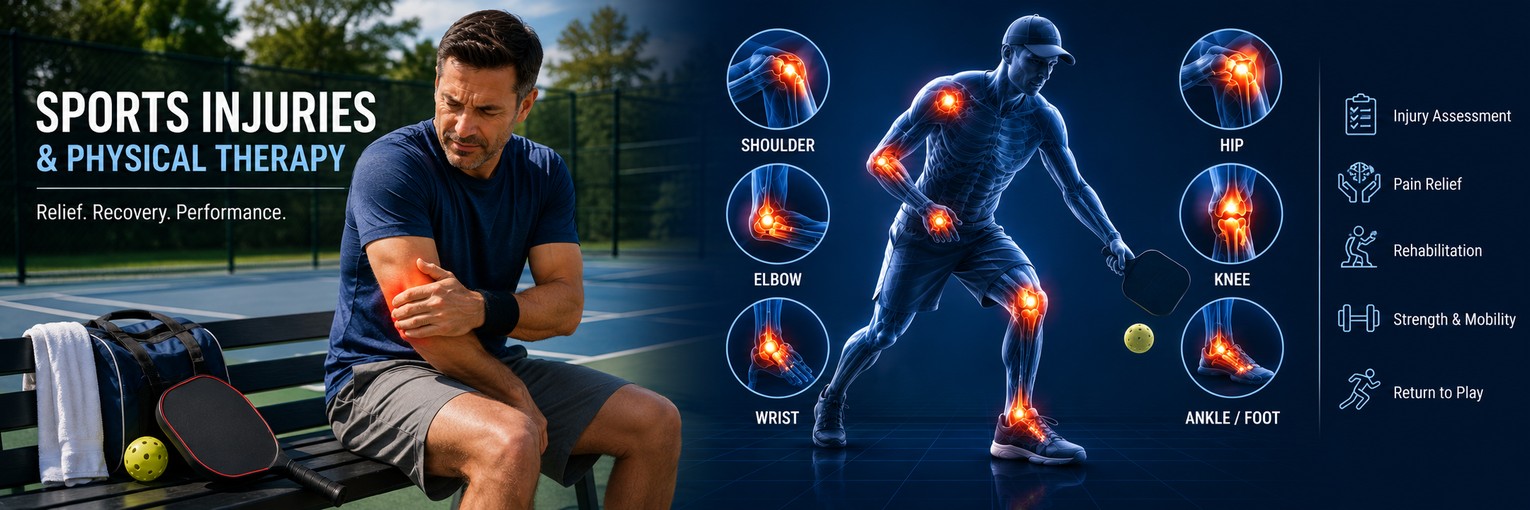
Sports Injury Recovery: How Physical Therapy Rebuilds Athletes for a Confident Return to Play
By Priya Chauhan, MPT, Clinic Director, iCURE Physical Therapy
When an injury takes you out of your sport, the pain is only part of the problem. You may also be thinking about the next game, the training you are missing, and whether the same injury will happen again when you return. Athletes want a timeline, but a date alone cannot tell you whether your body is ready for the speed, force, and unpredictability of competition.
When I evaluate an athlete, I begin with two questions. What structure is injured, and what will that athlete need to do confidently before returning? An accurate diagnosis and the severity of the injury matter. The quality and progression of rehabilitation also have a major influence on the outcome. Evidence supports an active and progressive approach. For common injuries such as ankle sprains, guidelines recommend early exercise and balance training for most patients, while broader research shows that exercise-based prevention programs, particularly strength training, can reduce sports injury risk [1][2].
Getting started. Many athletes in Washington can schedule an evaluation without a physician referral. At your first visit, we assess the injury, establish baseline measurements, and identify the demands of your sport and position. You leave with a clear explanation of the recovery stage and the first steps in your plan. Our team can also help verify insurance requirements before treatment begins.
Why Physical Therapy Works for Sports Injuries
Some sports injuries occur in a single moment. Others build gradually because training demand increases faster than the body can adapt. A tendon may become irritable after a sudden increase in running volume. An ankle may remain unstable after an earlier sprain. A shoulder may tolerate ordinary activity but struggle with repeated throwing or swimming. The diagnosis, tissue involved, training history, and current level of function all shape the plan.
Rehabilitation is not simply a set of general exercises. We examine the movements your sport requires, including running, landing, cutting, lifting, throwing, or changing direction. We measure strength, mobility, balance, power, and symptom response so that progress can be retested rather than assumed.
The early phase protects the injured area while maintaining as much safe movement as possible. The next phase rebuilds tissue capacity through progressive loading. Later sessions add speed, power, fatigue, decision-making, and sport-specific drills. Hands-on treatment may improve pain or mobility when those limitations are slowing exercise. Balance and coordination training are especially important after injuries that affect joint control. Clinical guidelines for ankle sprains, for example, favor early exercise and balance training over prolonged immobilization for most cases [2].
Persistent tendon pain also requires careful loading rather than endless rest. Many tendon conditions are better described as tendinopathy, which means the tendon has not adapted well to repeated demand. The type and dose of exercise should match the tendon, the stage of recovery, and how symptoms respond. Loading programs are supported for common Achilles and patellar tendon conditions, although the most appropriate progression depends on the individual presentation [3]. Rest alone may calm symptoms temporarily, but it does not restore the capacity required for sport.
Returning to Sport Safely
Your return should be based on readiness, not pressure from the calendar. Being able to jog does not automatically mean you are ready to sprint, cut, land, or compete under fatigue. The tests should reflect the actual demands of your sport and the injury you sustained.
Depending on the condition, return-to-sport testing may include strength and power, movement quality, repeated effort, sport-specific drills, symptom response, and psychological readiness. Return decisions are multifactorial and should reflect the injury, the athlete, and the demands of the sport [4]. For some lower-limb injuries, therapists may compare strength between limbs and use hop testing. Those measures are useful for selected injuries, but they are not a universal checklist for every athlete.
Objective testing matters because feeling better and being fully prepared are not always the same. In the Delaware-Oslo ACL cohort, athletes who met return-to-sport criteria before resuming competition had a substantially lower reinjury rate than those who did not [5]. After clearance, a maintenance program remains important. Continued strength and neuromuscular training can reduce injury risk when athletes perform it consistently [1].
Get It Checked and Treat It Right
Arrange an evaluation promptly if you have rapid swelling, heard or felt a pop, cannot bear weight, notice that a joint locks or gives way, or are not improving as expected. Early assessment helps clarify the diagnosis, establish realistic expectations, and protect the recovery process.
Our examination screens for injuries that require physician or surgical evaluation, including suspected fractures, complete tendon or ligament ruptures, locked joints, and signs of nerve or blood vessel involvement. When referral is needed, we coordinate with orthopedic or sports medicine providers. For many soft tissue injuries, rehabilitation can begin from a clinical examination without waiting for an MRI. Imaging becomes more useful when a fracture or complete rupture is suspected, surgery is being considered, or progress does not match the expected course.
Many insurance plans cover medically necessary physical therapy. Washington direct-access rules allow many patients to begin without a physician referral, although individual insurance requirements may differ. Our staff can help you confirm what your plan requires.
Sports Injury Care at iCURE Physical Therapy – Lake Stevens
Your sport has specific demands, and your rehabilitation should reflect them. At iCURE Physical Therapy, we work with school athletes, competitive adults, runners, lifters, and weekend athletes in Lake Stevens and across Snohomish County. Your plan is progressed using measurements, not guesswork, and the final phase prepares you for the movements and intensity you will face when you return. Schedule an evaluation when you want more than temporary pain relief. We will help you understand the injury, rebuild the qualities your sport requires, and return with a plan for staying durable. No physician referral is needed in most cases in Washington, and we accept most major insurance plans. Call 425-458-7261 to schedule your evaluation.
What You Can Do Today
- Modify the activity that caused sharp pain, but continue safe movement when possible. Gentle range-of-motion work or pain-free cross-training may help you maintain conditioning.
- Use relative rest, elevation, and ice for comfort during the first day or two when appropriate, while arranging an assessment for a significant injury.
- Seek prompt medical care for rapid swelling, inability to bear weight, a locked joint, repeated giving way, numbness, or color changes below the injury.
References
- Lauersen JB, et al. The Effectiveness of Exercise Interventions to Prevent Sports Injuries: A Systematic Review and Meta-analysis. British Journal of Sports Medicine, 2014. https://pubmed.ncbi.nlm.nih.gov/24100287/
- Martin RL, et al. Ankle Stability and Movement Coordination Impairments: Lateral Ankle Ligament Sprains Revision 2021. Journal of Orthopaedic & Sports Physical Therapy, 2021. https://www.jospt.org/doi/10.2519/jospt.2021.0302
- Malliaras P, et al. Achilles and Patellar Tendinopathy Loading Programmes: A Systematic Review Comparing Clinical Outcomes and Identifying Potential Mechanisms for Effectiveness. Sports Medicine, 2013. https://pubmed.ncbi.nlm.nih.gov/23494258/
- Ardern CL, et al. 2016 Consensus Statement on Return to Sport from the First World Congress in Sports Physical Therapy, Bern. British Journal of Sports Medicine, 2016. https://pubmed.ncbi.nlm.nih.gov/27226389/
- Grindem H, et al. Simple Decision Rules Can Reduce Reinjury Risk by 84% After ACL Reconstruction: The Delaware-Oslo ACL Cohort Study. British Journal of Sports Medicine, 2016. https://pubmed.ncbi.nlm.nih.gov/27162233/
Frequently Asked Questions (FAQ)
Q: How soon should I start physical therapy after an injury?
A: Many athletes can begin within the first several days, although the timing depends on the diagnosis and severity. Early guidance can protect the injury while limiting unnecessary losses in motion, strength, and confidence.
Q: Do I need an MRI before rehabilitation?
A: Usually not. A clinical examination can identify many sports injuries and establish a safe starting plan. Imaging is more useful when a fracture or complete rupture is suspected, surgery is being considered, or recovery is not progressing as expected.
Q: What happens at the first visit?
A: We assess the injury, measure relevant strength, mobility, balance, or movement, and discuss the demands of your sport. You leave with an explanation of the findings and an initial rehabilitation plan.
Q: When can I return to my sport?
A: Return is based on the injury, the demands of your sport, and your performance on appropriate tests. The goal is not simply to wait until pain decreases. The goal is to show that your body can tolerate the required movement and load.
Q: Is some discomfort normal during rehabilitation?
A: Mild, short-lived discomfort can occur as tissues adapt. Your therapist will give you clear limits for acceptable symptoms and adjust the program if pain is sharp, increasing, or lasting longer than expected.
This article provides general education and does not replace an individualized evaluation, medical or rehabilitation advice. Seek prompt care when symptoms are severe, worsening, or accompanied by warning signs.